 Home
Program 1
Program 2
Mechanism
Management
Advisors
Contact Us
Home
Program 1
Program 2
Mechanism
Management
Advisors
Contact Us

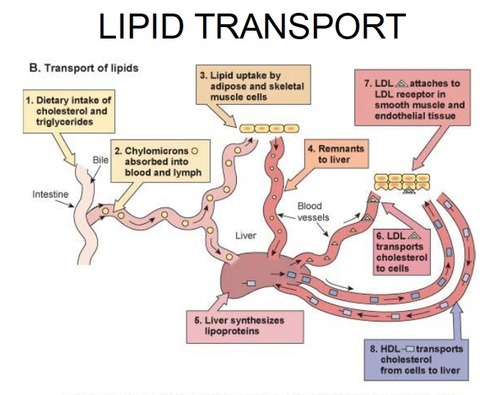
PLAP inhibits fat transport via blocking binding of fats to chylomicrons, the fat transporting proteins. [The scheme below shows the basic elements of fat transport.] On the other hand, the visceral fat metabolizes fat in the form of sweat and pee quicker than subcutaneous fat (mostly responsible for general obesity), explaining why low doses of systemic PLAP preferentially inhibit accumulation of fat in the visceral tissue. The reason oral PLAP also inhibits accumulation of fat in the subcutaneous fat tissue, largely contributing to general obesity, is because it acts directly at the intestinal source of primary fat absorption.
1. PLAP reduces the inhibitory effects of tumor-induced myostatin on the proliferation of myoblasts.
2. It increases and decreases the amounts of phospho-Akt and phospho-PI3-kinase in normal and cancer cells, respectively. These proteins, both being overexpressed in cancer cells, are major regulators of cell proliferation.
3. In contrast to myostatin, PLAP stimulates protein synthesis in muscle cells.
● Proven not to cause side effects in mice and humans
● Required for normal human fetus growth
● It is resistant to heat (up to 65 Celsius) and proteases: As a result it has an up to 10 days of half-life time in the human circulation (~4 days in mice)
● Inactivates the inflammatory mediators Lipopolysaccharide and extracellular ATP. The concentration of extracellular ATP around tumors is high; elimination of ATP may contribute to the antitumor effects of PLAP
● It is an antitumor and anticachectic agent while also protecting the bone marrow and mesenchymal stem cells against the toxic effects of cancer drugs
● Not only reduces blood glucose in obese diabetic mice along with normalizing high serum level of insulin, but in experimentally induced pancreatitis in mice also prevents the development of type 3c diabetes
● Protects human pancreatic insulin producing cells against the toxic effects of saturated fatty acids (palmitic and stearic acids)
● Due to its large effects on visceral fat, in obese mice PLAP practically normalizes high triglyceride levels (something statins cannot do) and substantially (50-60%) reduces the high level of LDL-cholesterol
● Due to its stimulatory effects on the proliferation of human fibroblasts and keratinocytes, PLAP promotes wound healing both in mice and humans. Due to its positive effects on diabetes, PLAP may prove to be an essential tool to promote healing diabetic wounds (this is open to investigation and then patent protection)
SUMMARY: The company which is willing to invest in large scale production of PLAP will be able to use it for addressing a variety of health issues in a very competitive manner
AVAILABILITY: IT IS PRESENTLY AVAILABLE FROM COMMERCIAL SOURCES.
RECOMBINANT PLAP HAS ALSO BEEN PRODUCED BY A PLANT, AND THIS TECHNOLOGY CAN BE PURCHASED.